Systems Thinking: A Better Way to Solve Problems
My son was four years old and we were having trouble with him. For months, things had been going well, but then something changed. He started acting obstinate, frustrated, and throwing tantrums. We tried several strategies we had read about in books when he was in the middle of one of these episodes, but nothing seemed to work and we were at our wits' end.
After two weeks of this, I sat down with a notebook and began to sketch out a web like one I had seen a professor draw while I was getting my master’s in education. Instead of thinking of what to do when my son was acting out, I tried to think of everything that could contribute to acting out. I made a web that looked something like this.
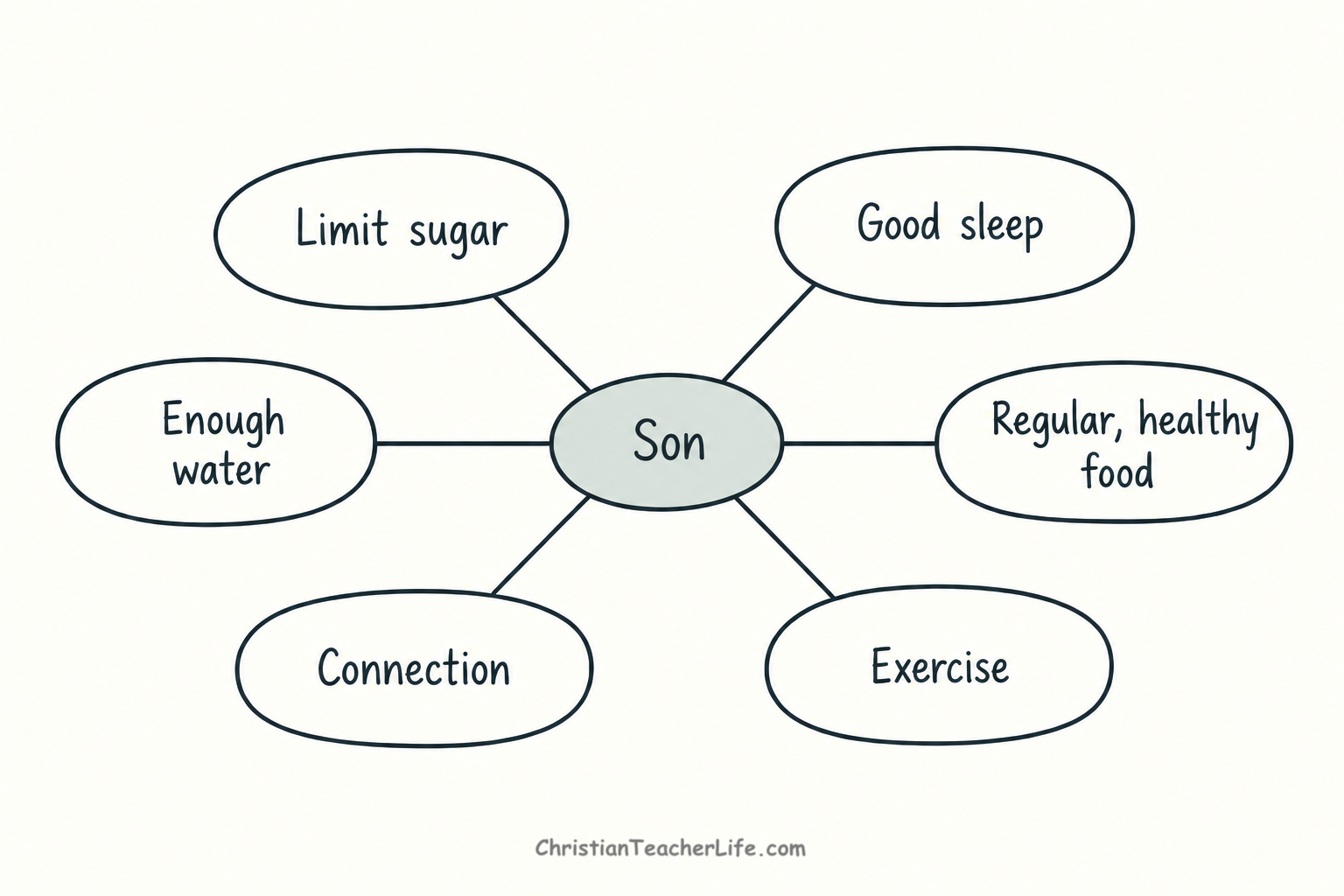
I could have organized this list more, grouping factors into categories such as physical needs, emotions, and nutrition, and drawn arrows showing the relationship between these various factors, but this was a rough sketch.
I can't tell you the relief I felt looking at this web. Previously, I felt powerless because nothing we tried was working, and I had to wait until the next tantrum to intervene. Now, I could see multiple things I could do to influence his behavior, and I could start today.
We had been approaching the problem with linear thinking: when he acts out, try one intervention. It wasn't working. Now, I could see the problem through the lens of systems thinking.
Over the next few days that summer, we were intentional about everything on the map. We made sure he drank enough water, got plenty of sleep and exercise, and ate nutritious meals with limited sugar. I also made sure to put everything away for at least 20 minutes a day and connect with him through play.
His behavior immediately changed. Why? I don’t exactly know.
That’s a big difference between linear thinking and systems thinking. Linear thinking looks for a direct connection between a problem and its solution. Systems thinking looks at how multiple factors interact to produce an outcome. In systems thinking, the same problem might appear five different times, each time resulting from a different cause. Or, several factors might combine to produce the problem. As a result, it can be difficult to pinpoint exactly which changes produced the results because several factors may have been working together.
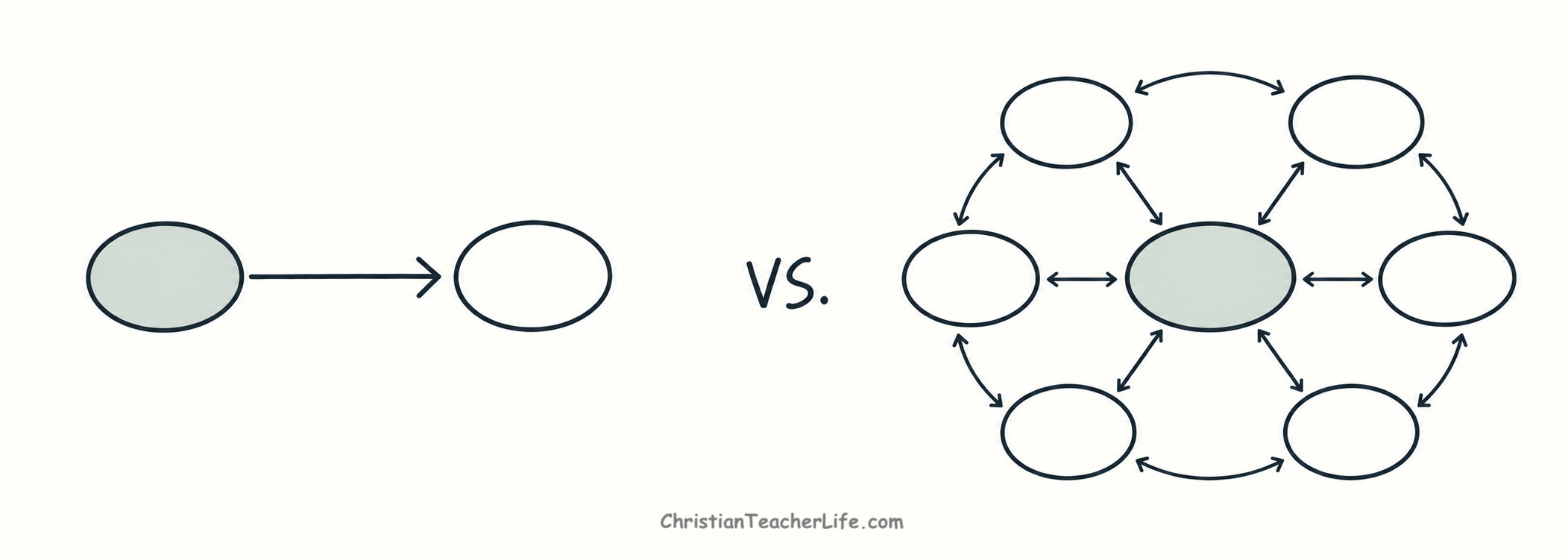
Looking at the map, we know that each of these factors such as sleep, exercise, and connection can influence our mood and behavior. These factors can work independently, or they can work together.
Some of my son's tantrums might have been caused by tiredness. Others might have been related to not getting enough exercise or time outside. Some might have been because I was busy and not connecting with him. And some problems might have been a combination. A tired child might not tolerate hunger as well as a well-rested child. There wasn’t necessarily one problem to fix but rather a host of factors I could influence.
When it comes to teaching, we can get stuck in linear thinking. Sometimes, it shows up in the questions we ask or the comments we make. Here are some examples.
“Why does Tim behave in your class?”
“How do you stop students from cheating?”
“My third period is so dead. I'm going to try a new activity today to see if that fixes it.”
These questions and comments, and others like them, seem to assume that there is one contributing factor when really there could be many. Classroom management isn't a single strategy; it's a whole system. The same is true of classroom culture, student engagement, and academic integrity. We might find a single strategy that helps in a particular situation, but these larger challenges are best approached by looking at the system as a whole.
If you think back to the time you were in school to get your teaching degree, you probably encountered systems for classroom management or student engagement. Professors had the time and space to lay out systems. But since then, you’ve probably encountered more linear thinking, more quick-fix strategies. This makes sense. Systems take time and thought to understand, while strategies are quick to explain and implement.
But let’s not forget that some of our biggest challenges require systems thinking. Ask yourself, have you been approaching a problem that deserves a systems approach? Sit down, put your problem in the middle of a page, and start mapping all the factors that could contribute to it. Look for connections between those factors and consider which ones are the biggest levers and which are the easiest to influence today.
You may not find one simple solution. But you might discover something more useful: a new way to approach the problem and more opportunities to make things better.